For grown-ups · first nights away
5 gentle ways to prepare your child for a first sleepover
A first night away — at a grandparent's, a friend's, even a cousin's floor — is one of childhood's quiet brave acts. The wobble at the door isn't a problem to fix; it's the feeling working. Here are five small, concrete things that help, borrowed from Bruno's first night at Nana and Papa's.
1. Pack one small piece of home
Not the whole toy shelf — one thing that smells or feels like home. A pillowcase, a scrap of blanket, a t-shirt that lived in your closet. Smell is the shortest road to safety a small nervous system has.
He chose a quilt square that smelled like Grandma's chair. "Just in case," he whispered.
— The Little Brave Bear
2. Name both feelings out loud — before the goodbye
The meltdown usually comes from thinking you must choose: excited or sad. Say it for them, in the car on the way: "You might feel excited AND miss home tonight. Both can be true at the same time." Feelings that have been predicted are half the size when they arrive.
3. Teach the hand-on-heart trick
A hand placed flat on their own chest, feeling the heartbeat — "home lives in here, too." It's portable, invisible, and needs no grown-up to work. Practice it once at home so it's familiar when it matters.
4. Give the goodbye a ritual, not a fade-out
Sneaking away teaches a child to watch the door. A short, warm, predictable goodbye — kiss on the nose, one sentence, gone — teaches them goodbyes are survivable. And always say when you'll be back:
"I'll see you in the morning, little one. You are braver than you know."
— The Little Brave Bear
5. Redefine brave before bedtime
The most useful sentence a child can carry into a dark, unfamiliar room isn't "there's nothing to be scared of." It's this:
"That is what brave means. Not feeling no fear. Feeling it — and staying anyway."
— The Little Brave Bear
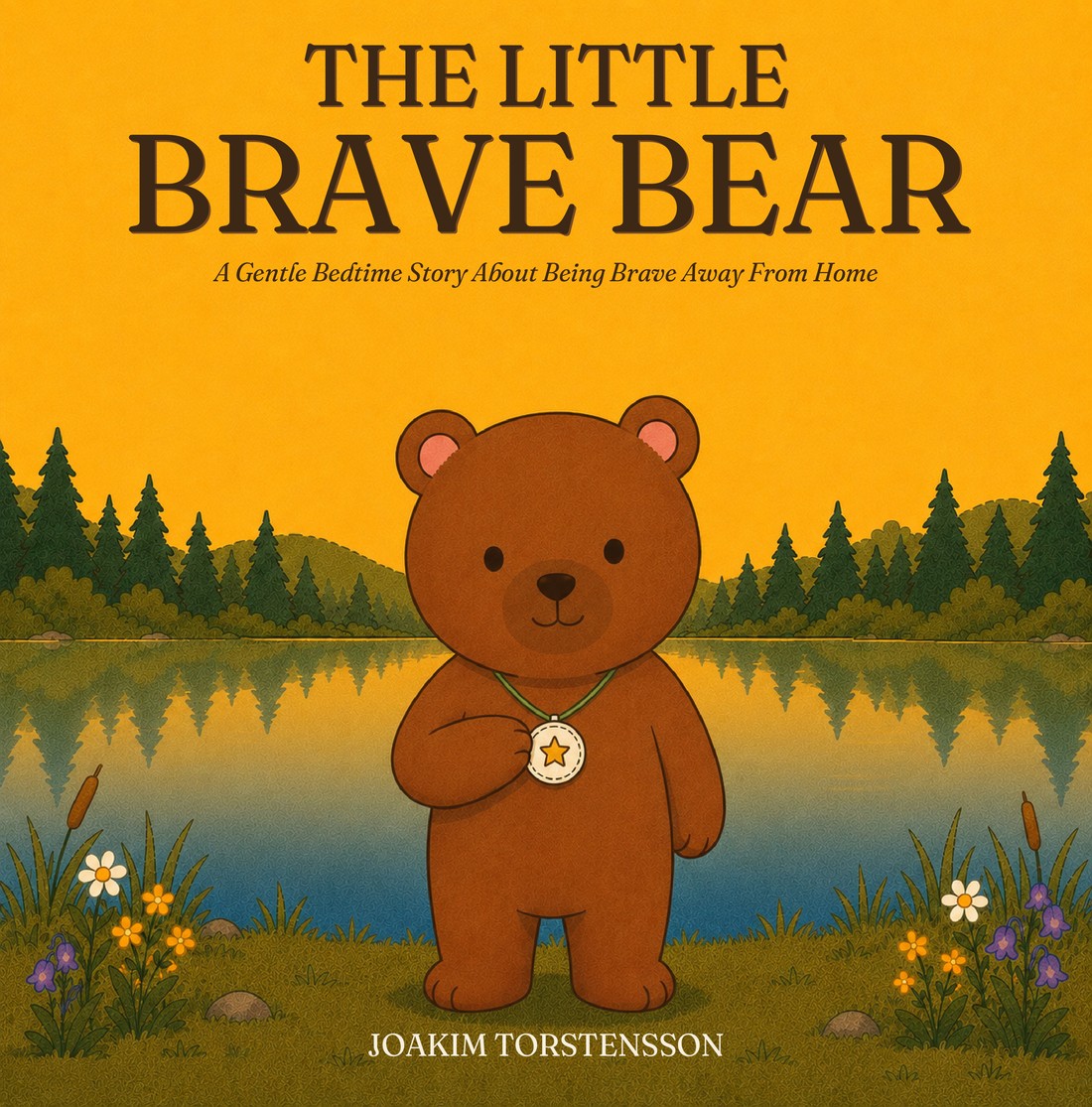
Read the whole first night
The Little Brave Bear walks through all five of these, one gentle page at a time — written to be read aloud the week before the big night. Ages 3–7.
See the Book